
Machine Guarding Requirements When Installing or Relocating Industrial Equipment
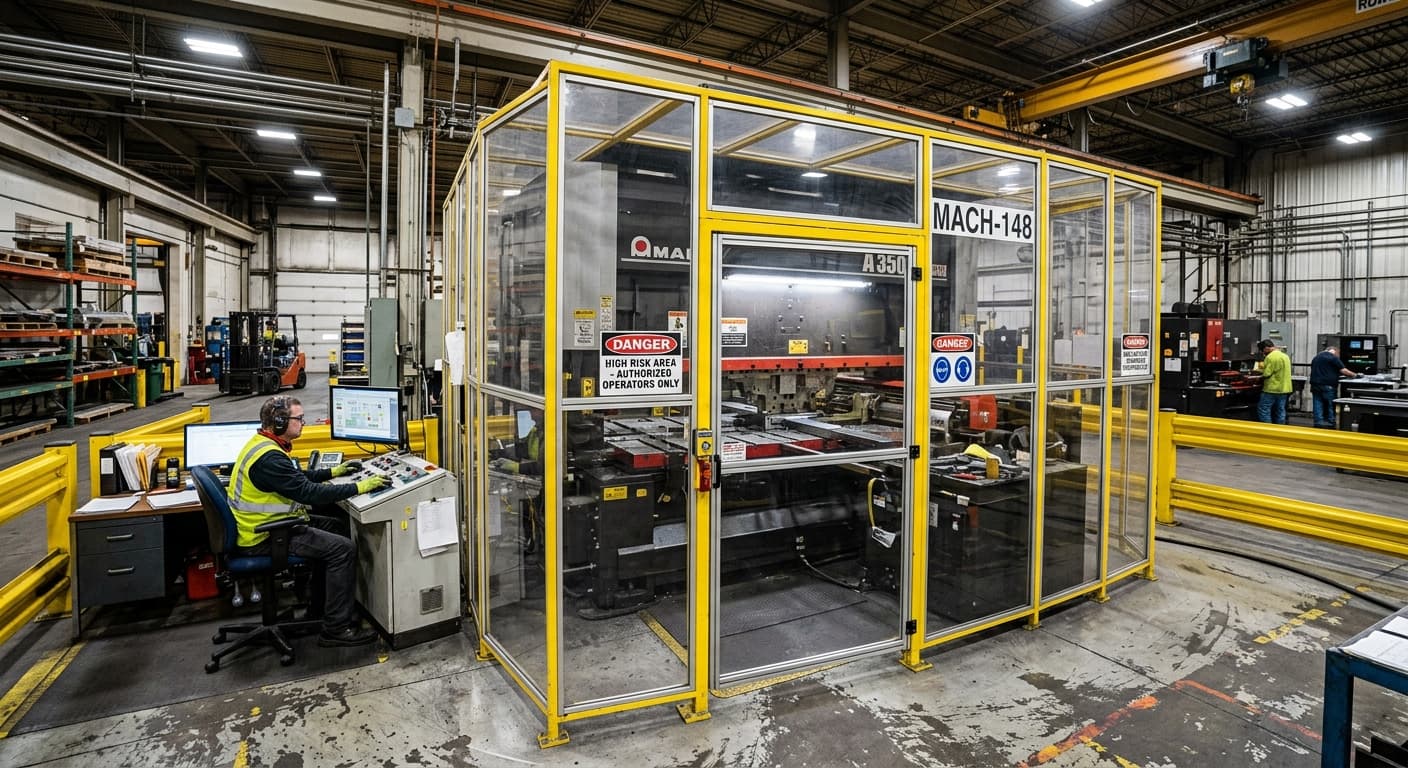
Whether you're bringing in a new machine or moving an existing one to a new line, guarding isn't something you bolt on after the fact — it's part of the installation itself. A machine that was properly guarded in its old location can become non-compliant the moment it's relocated, if the new layout changes access points, sightlines, or proximity to walkways. Here's what to check before that equipment goes live.
Why Relocation Resets the Compliance Clock
Machine guarding requirements are tied to the hazard as installed, not just the machine as manufactured. Moving equipment can introduce new risks that weren't present in its original spot:
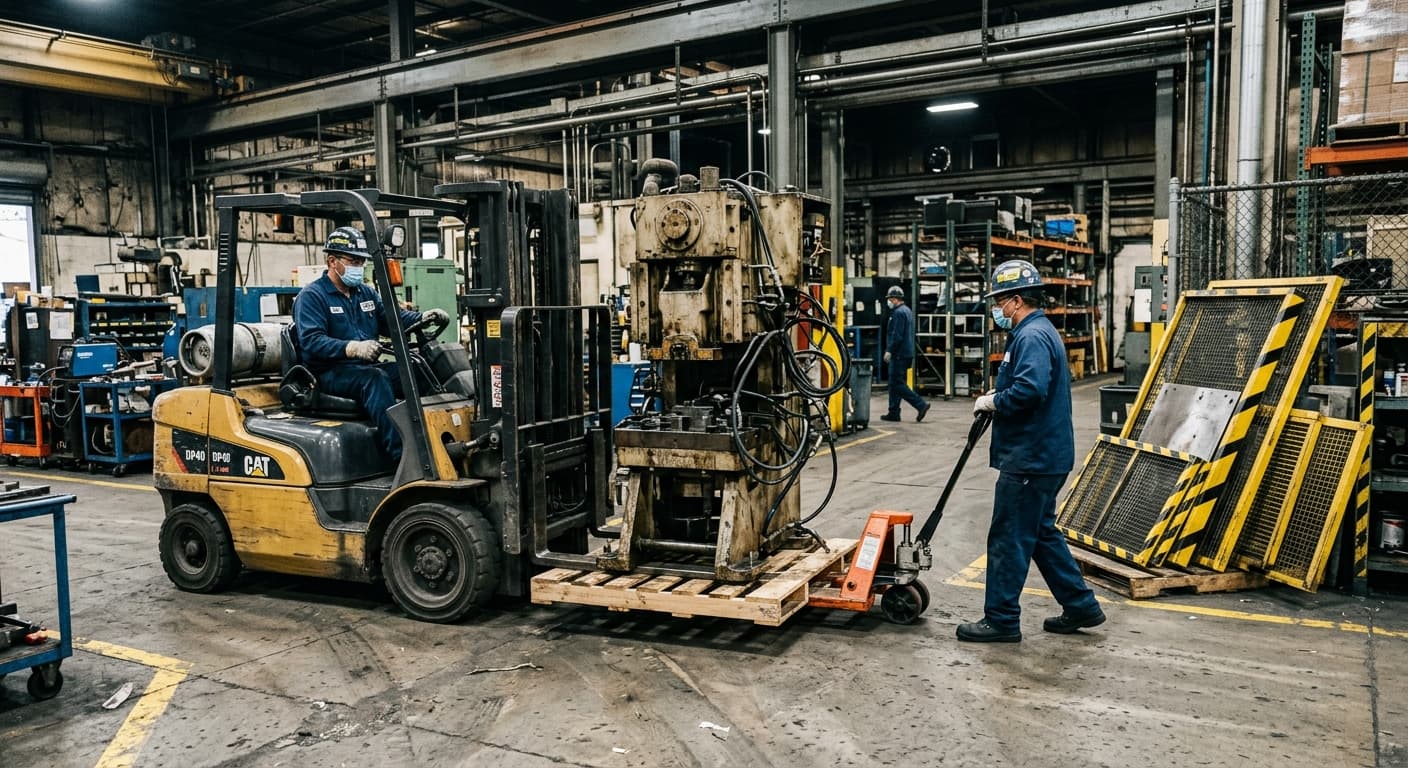
- New pinch points or walkways created by the equipment's new orientation
- Changed operator position, which can put hands, arms, or the body closer to moving parts
- Loss of guards or barriers left behind during the move, or damaged in transit
- New adjacent hazards— a machine now sits near a conveyor, forklift path, or another operator's workstation
Because of this, any relocation should trigger a full guarding review, not just a visual check that the original guards are still attached.
Core Guarding Requirements to Verify
Point-of-Operation Guarding
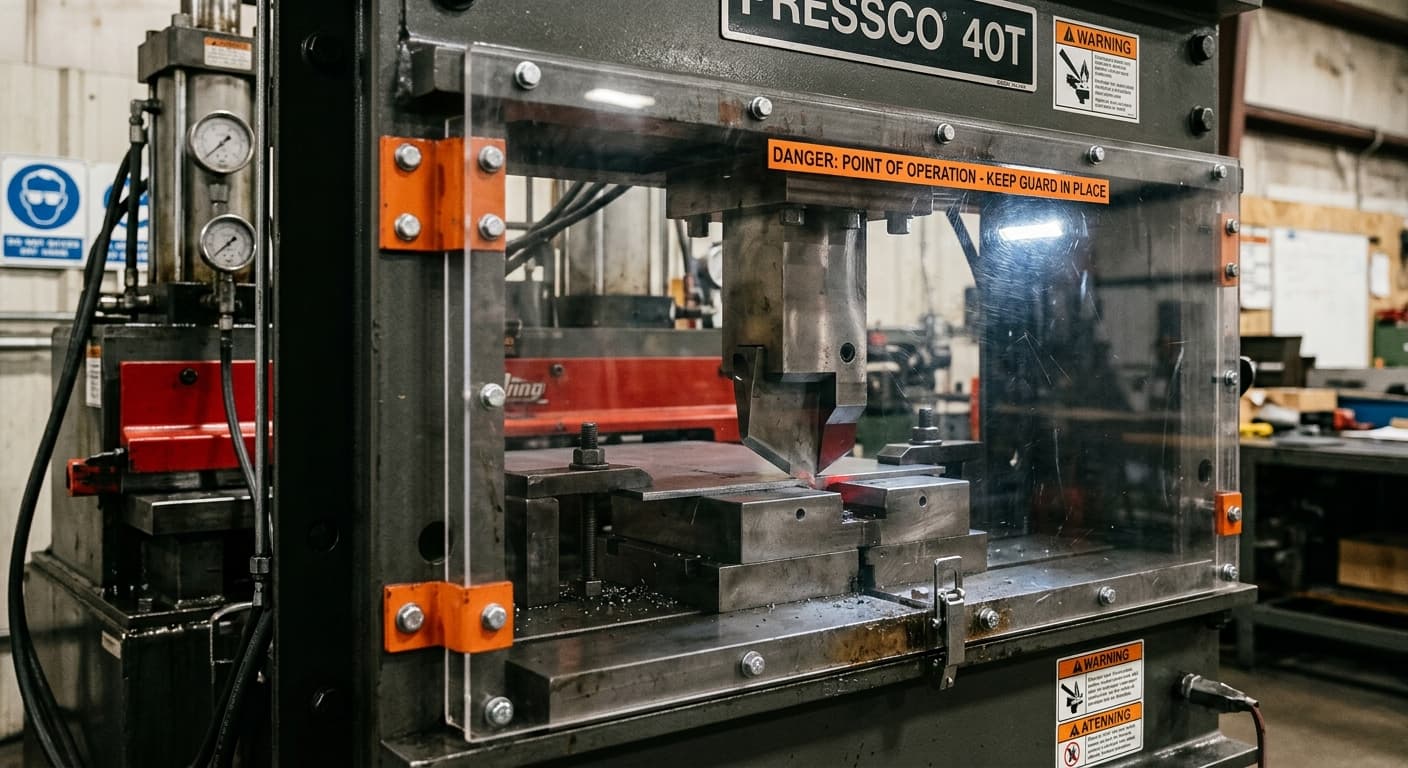
Anywhere the machine performs work on material — cutting, punching, pressing, shearing — must be guarded to prevent hands or body parts from entering the danger zone during operation.
Power Transmission Guarding
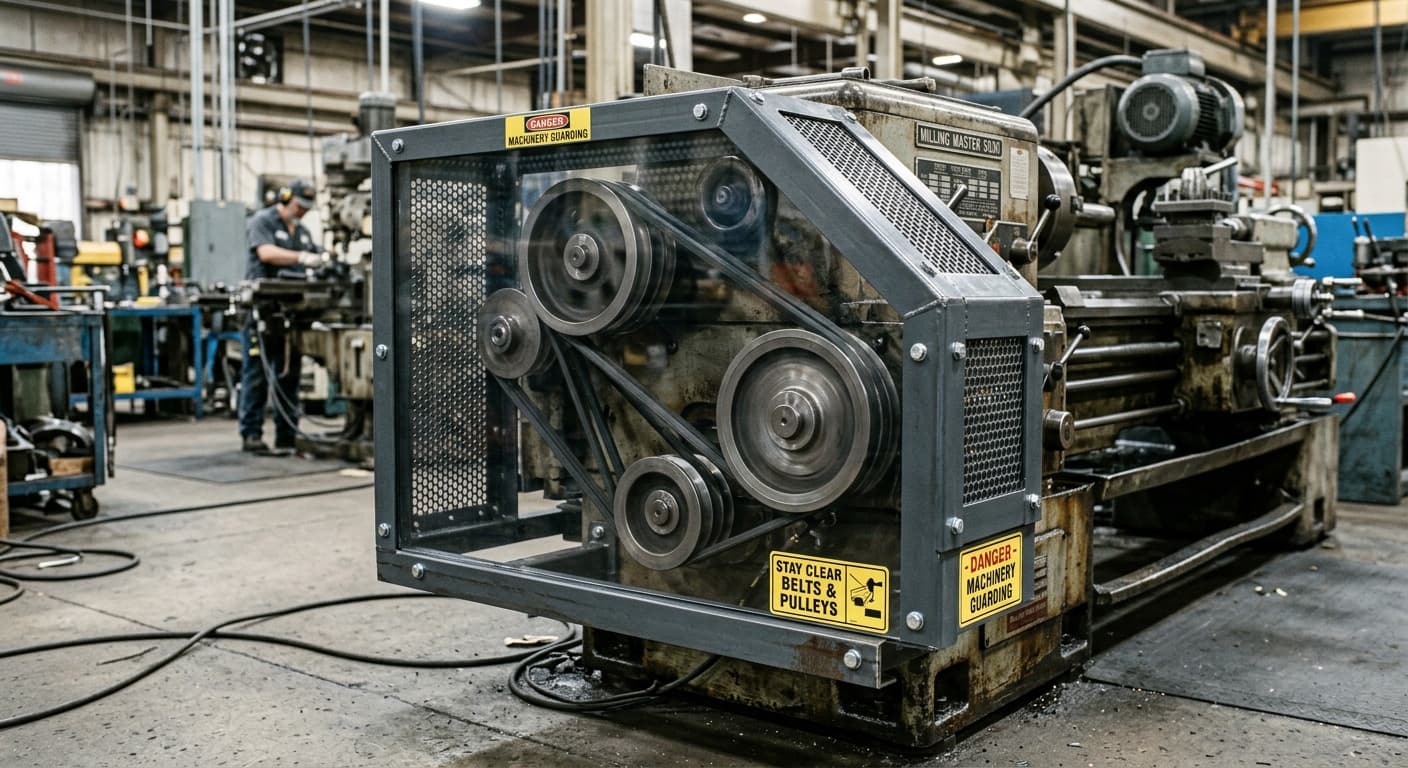
Belts, pulleys, chains, gears, and shafts need fixed guards regardless of height or accessibility, since these are often overlooked when equipment is reassembled after a move.
Guarding for Rotating and Moving Parts
Any exposed rotating or reciprocating part — spindles, flywheels, rollers — needs a barrier guard, interlocked guard, or presence-sensing device appropriate to the hazard.
Fixed vs. Interlocked vs. Adjustable Guards
Choose the guard type based on how often the point of operation needs access:
- Fixed guards for parts that rarely need adjustment
- Interlocked guards that stop the machine when opened, for parts requiring regular access
- Adjustable/self-adjusting guards for varying stock sizes, common in woodworking and metal fabrication
Emergency Stops and Control Reach
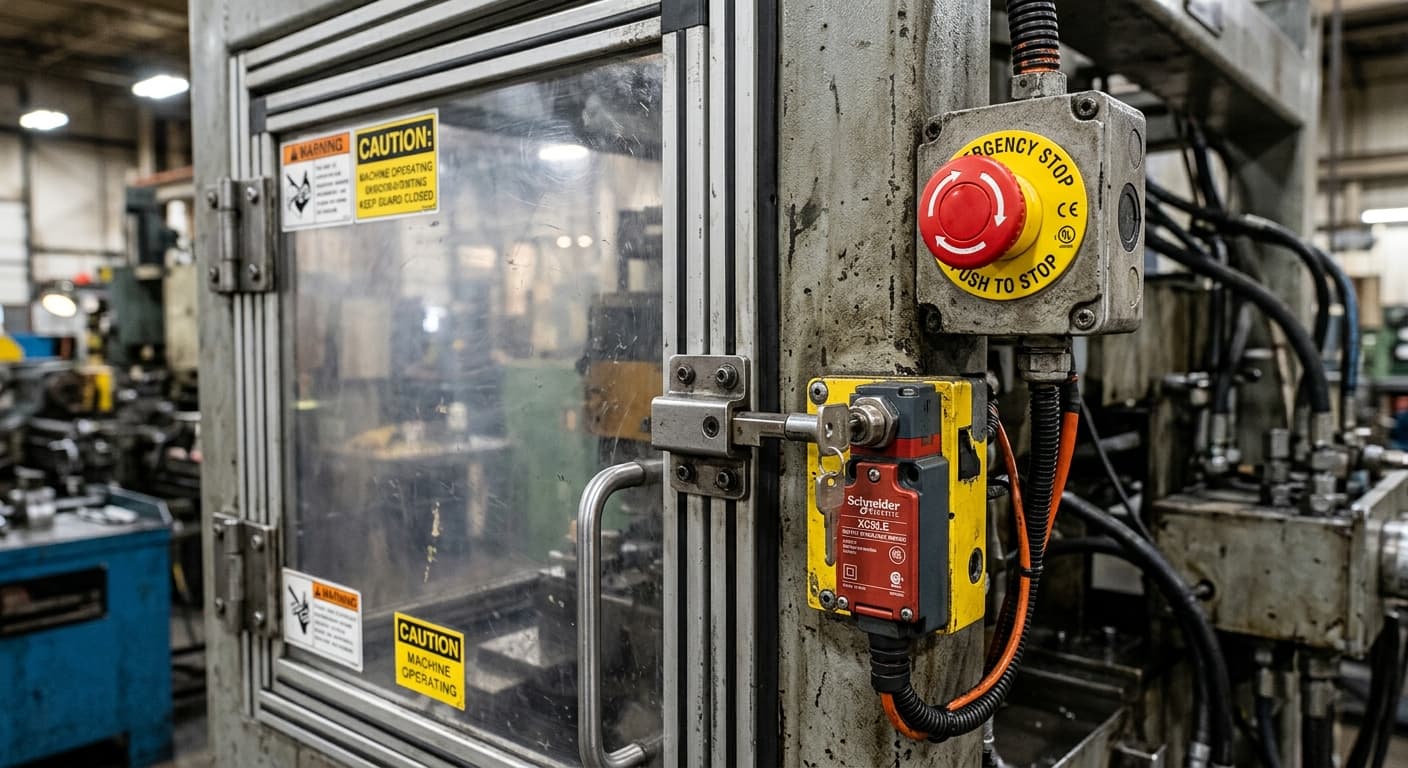
E-stops must be reachable from the operator's normal working position and clearly visible — a relocation that shifts the operator's stance can put the e-stop out of easy reach without anyone noticing until it matters.
Clearances and Walkway Distances
Confirm the relocated machine still meets minimum clearance requirements from walkways, other equipment, and electrical panels. A machine that fit its old footprint doesn't automatically clear the new one.
Choosing Guard Material
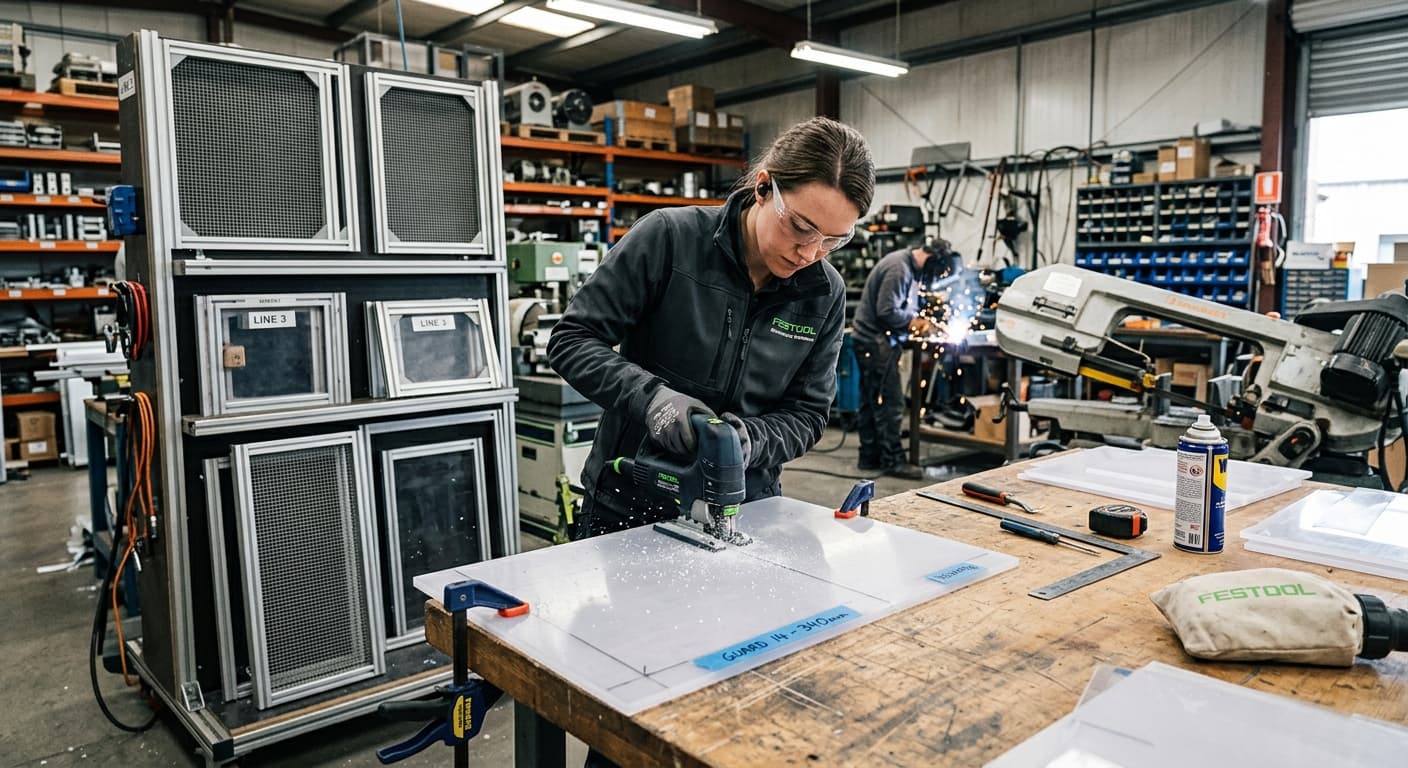
For fixed and interlocked guards, polycarbonate is the standard choice over acrylic or wire mesh where visibility matters:
- Impact resistance — polycarbonate withstands flying debris, chips, and coolant spray far better than acrylic, which can crack or shatter under the same impact.
- Visibility — unlike wire mesh or perforated metal, clear polycarbonate lets operators and supervisors see the point of operation without opening the guard, supporting both safety and quality checks.
- Machinability — polycarbonate can be cut, drilled, and fitted to custom guard frames on-site, which matters when a relocation calls for a guard resized to a new footprint rather than a stock panel.
Guard thickness should scale with the hazard — light-duty enclosures around slower-moving parts can use thinner sheet, while guards near high-speed cutting or punching operations should use thicker, impact-rated polycarbonate. Not sure which way to go? See how polycarbonate compares to acrylic for impact-critical applications.
A Practical Checklist for the Move
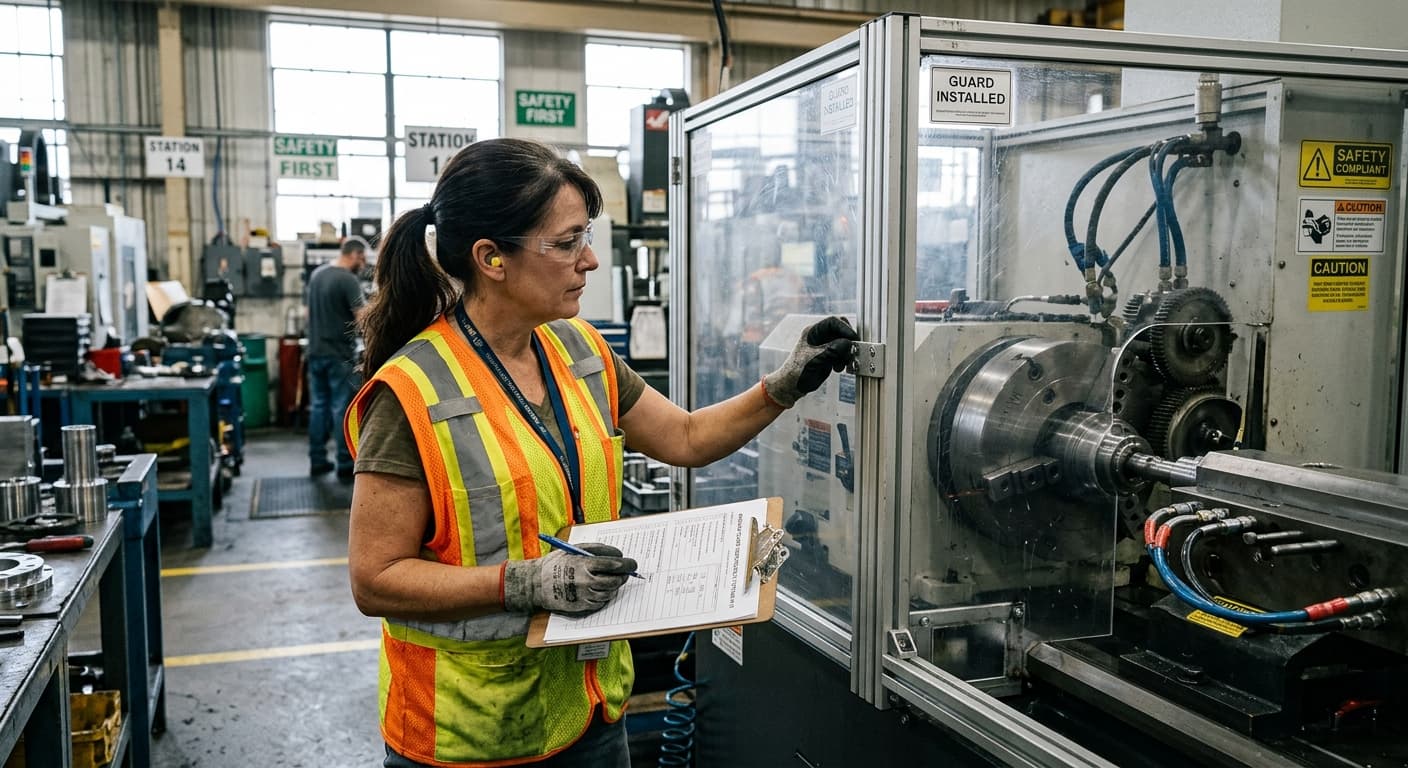
- Reassess all guarding needs based on the new layout, not just the machine's original spec sheet
- Reinstall or replace any guards removed for transport, using the correct guard type for each hazard
- Confirm point-of-operation guarding is intact and properly fitted, with no gaps introduced during reassembly
- Re-test interlocks and e-stops after reassembly — a jarred sensor or loose interlock switch is a common post-move failure point
- Verify clearances to walkways, adjacent machines, and electrical panels in the new location
- Document the guarding review — a written record protects you if compliance is ever questioned
Getting Guards Made for a Relocation
If a move means an existing guard no longer fits — different footprint, new access point, resized opening — custom-cut polycarbonate panels are usually faster to source than waiting on OEM replacement guards. Use our cut-to-size calculator to get sized panels quoted with shipping included, or reach out if you need help specifying the right thickness for the hazard. If you're fabricating panels in-house, our guide to cutting and drilling polycarbonate covers doing it without cracking the sheet.
This post is general guidance, not a substitute for a site-specific safety assessment. Always confirm requirements against the applicable regulations for your jurisdiction and equipment type.