
How to Cut, Bend, Drill, and Clean Polycarbonate Sheet
Polycarbonate is tough, but that toughness works against you if you machine it the wrong way. Crack a sheet mid-drill or leave stress marks from an aggressive bend and you've wasted material that was supposed to be the unbreakable option. Here's how to work with Poly-Sky polycarbonate sheet properly, whether you're cutting a panel down to size or finishing an edge on-site.
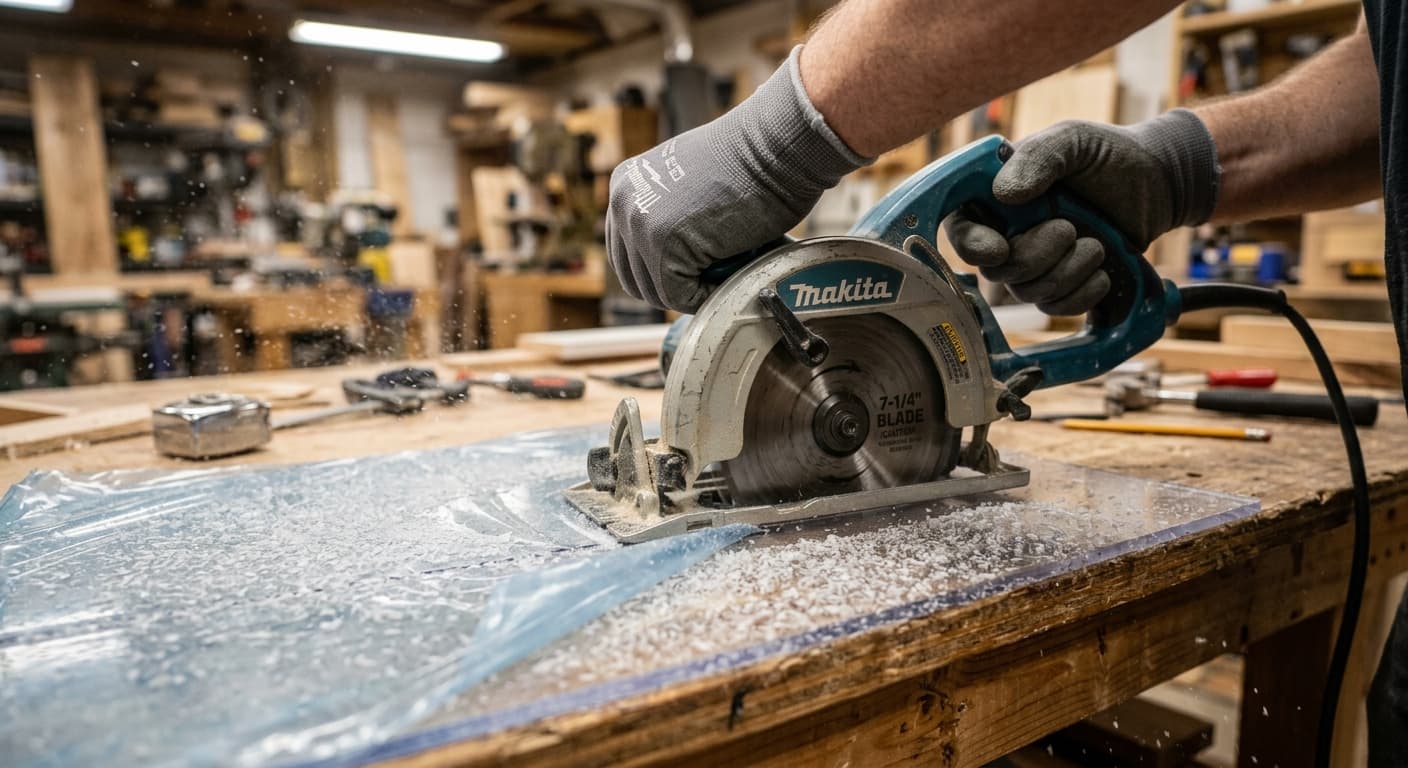
Cutting Polycarbonate
What to use:
- Thin sheet (under 1/4"): a fine-tooth utility knife with multiple light scoring passes, then snap along a straight edge
- Thicker sheet: a circular saw or table saw with a carbide-tipped, triple-chip grind blade (fine tooth count, high blade speed)
- Curved or detailed cuts: a jigsaw with a fine-tooth plastic-cutting blade
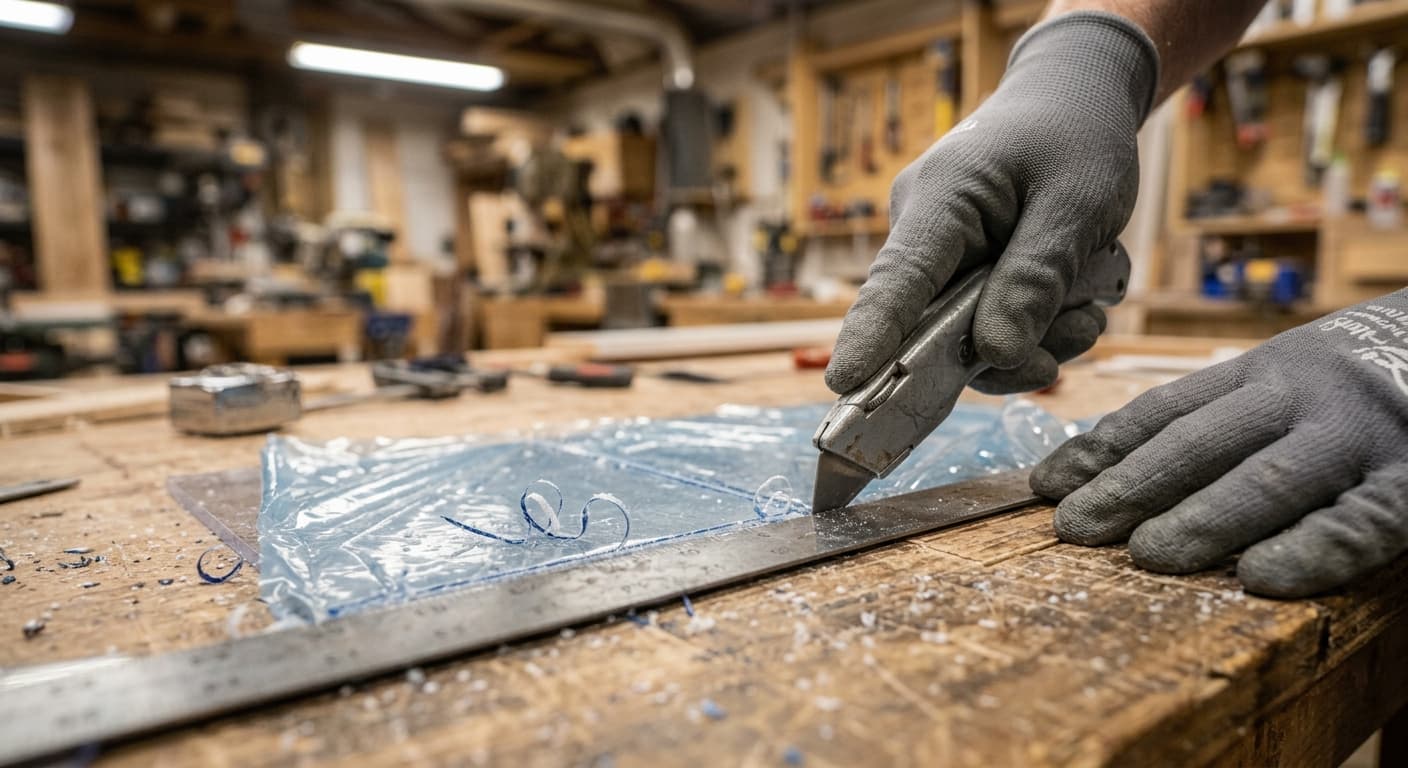
Technique tips:
- Keep the protective film on during cutting — it reduces scratching and chipping along the cut edge.
- Support the sheet fully so it doesn't flex or vibrate; chatter causes micro-cracks that can propagate later.
- Feed the blade slowly. Polycarbonate melts before it cracks if you push too fast, which gums up the blade and leaves a rough edge.
- Let the saw do the work — forcing the cut is the single most common cause of chipped edges.
Bending Polycarbonate
Polycarbonate can be cold-bent to a gentle curve or heat-bent for a sharp angle.
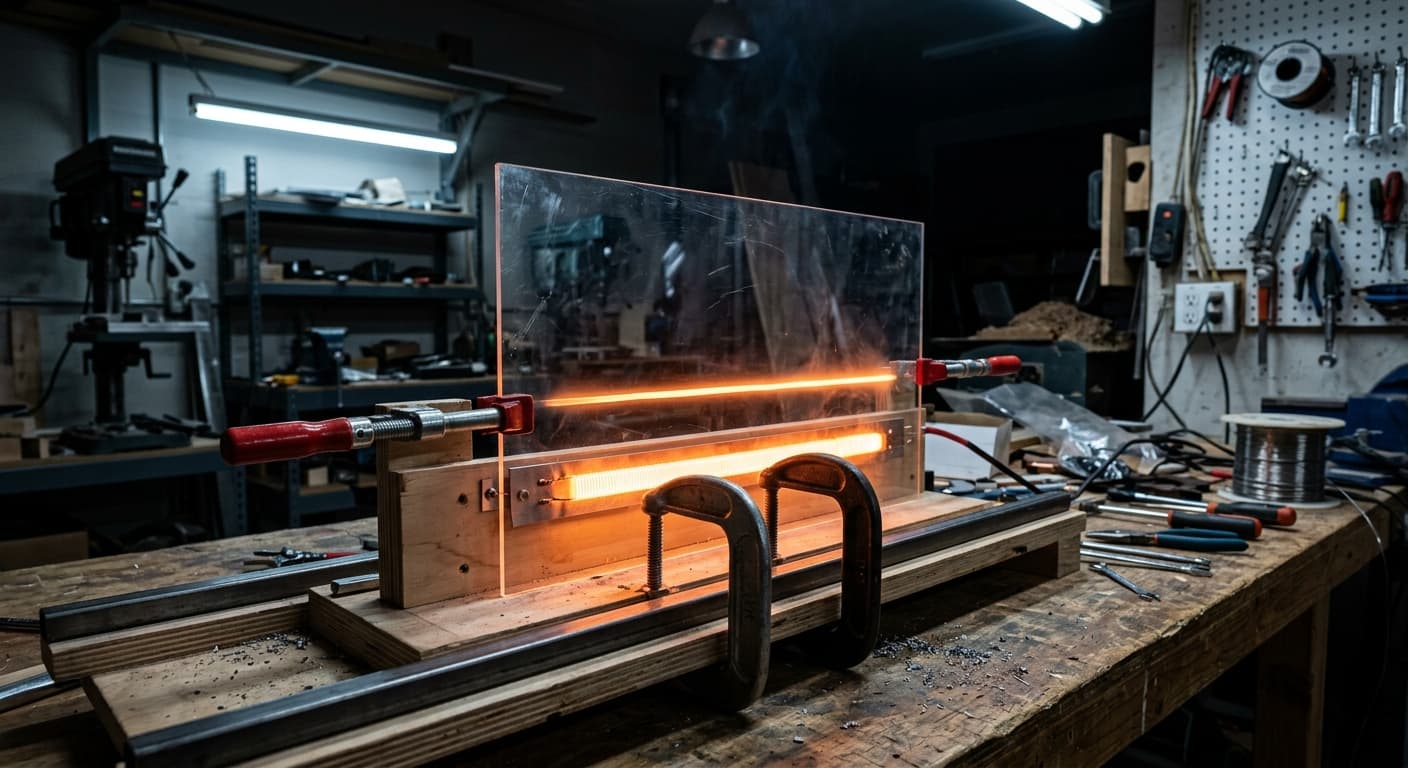
Cold bending (no heat, for gradual curves)
- Works for large-radius curves only — check the minimum bend radius for your sheet thickness before forcing it, since too tight a curve will stress-crack the material.
- Secure the sheet gradually along a curved form rather than bending it by hand in one motion.
Heat bending (for sharp angles)
- Mask the bend line and heat it evenly with a strip heater or heat gun, keeping the tool moving to avoid a hot spot.
- Test with a light touch — the sheet should feel pliable, not scorched or bubbling.
- Bend against a straight edge or jig to the target angle and hold until it cools and sets.
- Avoid open flame or concentrated heat guns held in one spot — localized overheating causes bubbling and discoloration.
Drilling Polycarbonate
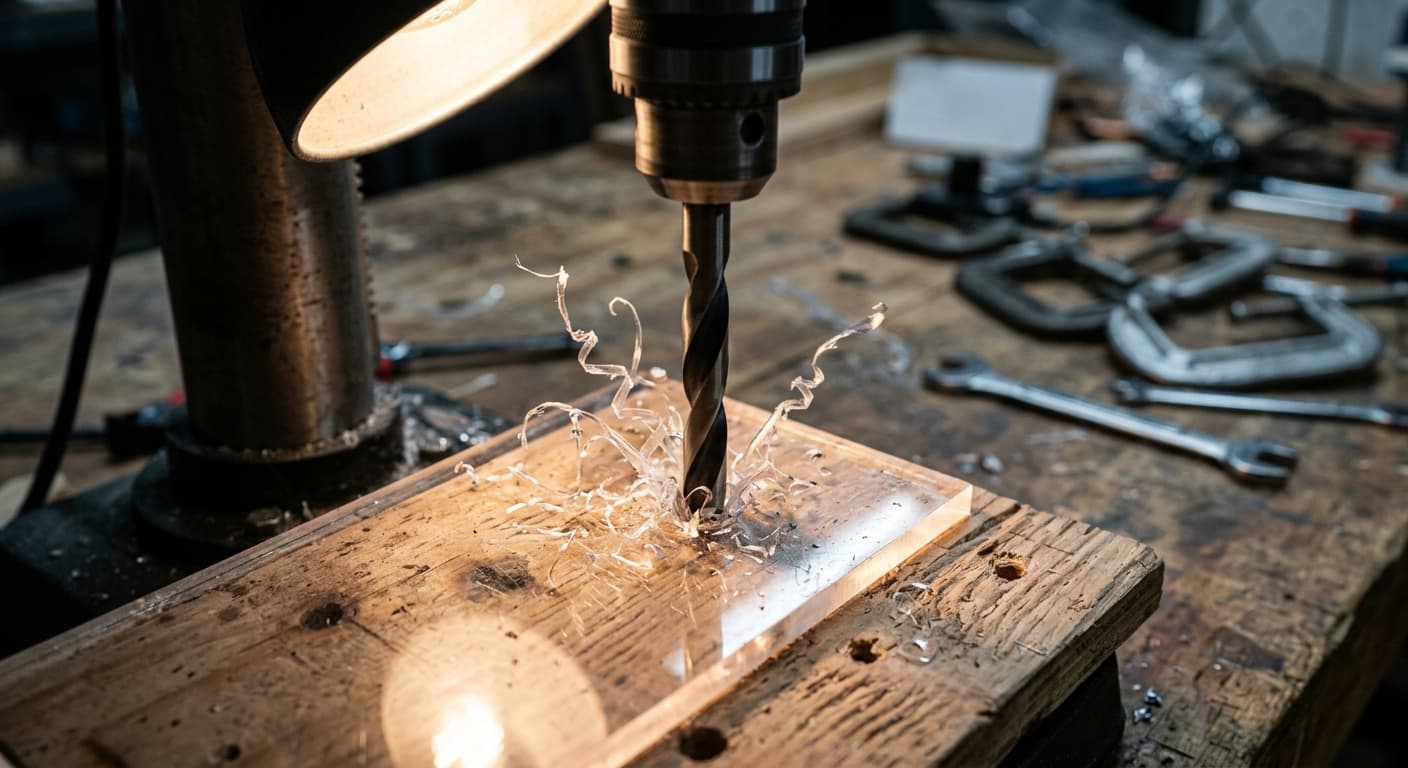
- Use a drill bit designed for plastics, or a standard bit with a modified point angle (around 60°) to reduce grabbing.
- Run the drill at a moderate speed with light, steady pressure — high speed generates heat that can melt and reweld the hole shut.
- Back the sheet with a sacrificial board underneath to prevent blowout as the bit exits.
- Drill holes slightly oversized (roughly 1.5x the fastener diameter) if the panel will be exposed outdoors — polycarbonate expands and contracts with temperature, and an undersized hole can crack the sheet as it moves.
- Never drill too close to the edge; keep holes at least 2x the sheet thickness away from any edge to avoid stress fractures.
Cleaning Polycarbonate
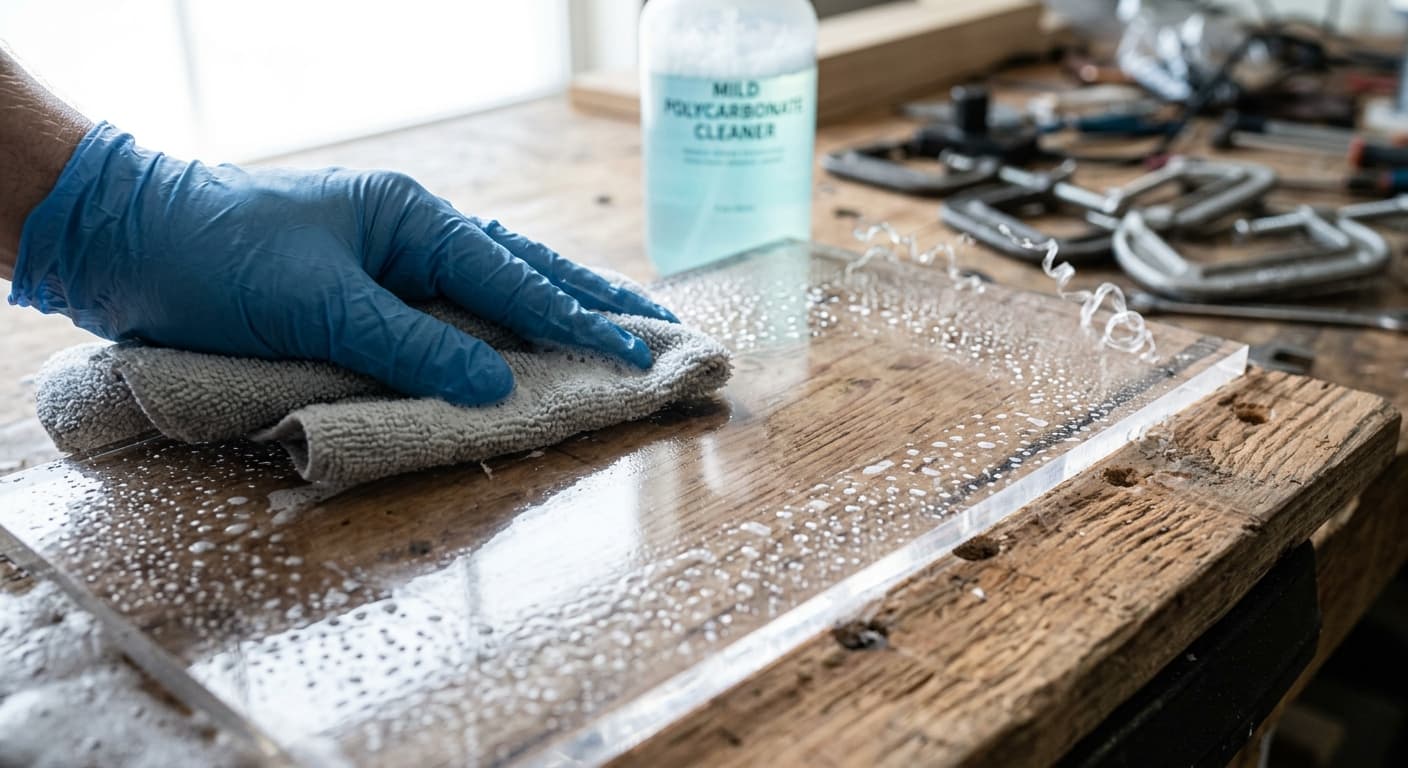
- Use a soft microfiber cloth or sponge with lukewarm water and a mild soap — never a paper towel or anything abrasive, which will scratch the surface.
- Rinse away loose grit first before wiping, so you're not dragging particles across the sheet.
- Avoid ammonia-based glass cleaners (like standard Windex) — they can cause crazing and clouding over time. Stick to plastic-safe cleaners or soap and water.
- For stubborn residue (adhesive, paint overspray), use isopropyl alcohol sparingly and test on a small area first — some polycarbonate coatings are sensitive to solvents.
- Dry with a clean microfiber cloth rather than air-drying, to avoid water spots.
Common Mistakes That Crack Sheets
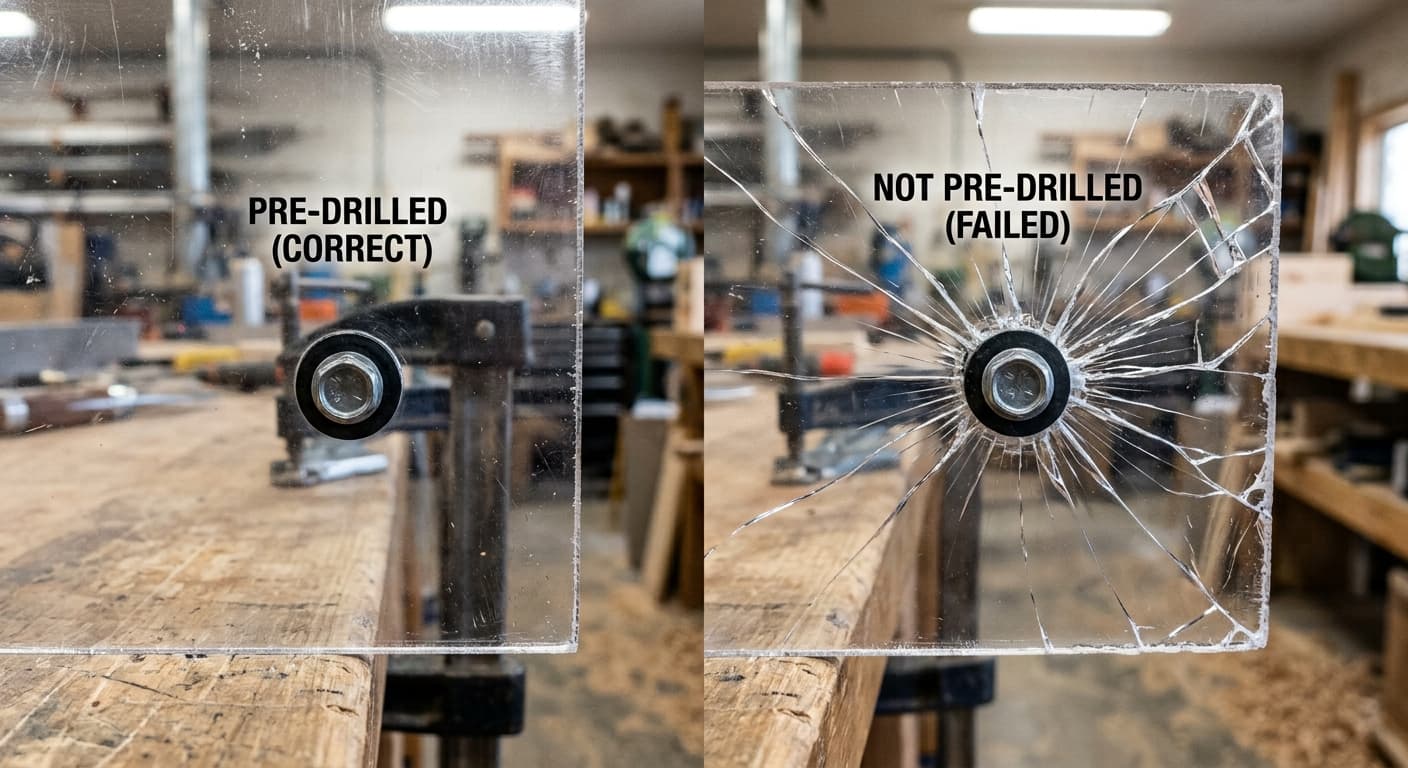
- Cutting or drilling without support underneath
- Overtightening fasteners instead of leaving room for thermal expansion
- Using the wrong blade or bit designed for wood or metal
- Bending below the minimum radius for the sheet thickness
- Cleaning with abrasive materials or ammonia-based products
Get the Right Sheet for the Job
Working with the correct thickness and grade of polycarbonate from the start makes all of the above easier — thinner sheet is more prone to cracking under stress, while properly UV-coated sheet holds up better to outdoor drilling and long-term cleaning. Use our cut-to-size calculator to get panels sized to your project before you start cutting.
Questions about the right thickness or coating for your project? Reach out and we'll help you spec it out.